Why Flooring Matters In Beverage Production Facilities
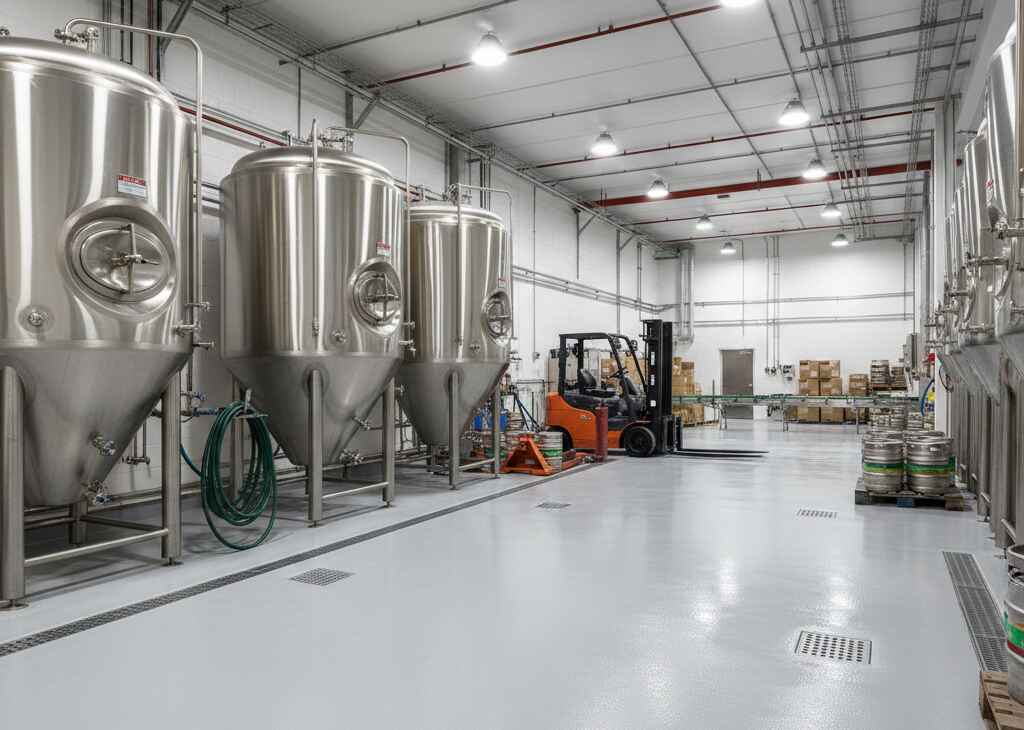
The production environments in breweries, distilleries, and other beverage manufacturing facilities are particularly harsh. Flooring is constantly exposed to liquids, foot traffic, machine traffic, temperatures ranging from above 100°C to near freezing, and the weight of vats, conveyor belts, and other heavy machinery.
Beyond these environmental factors, hygiene is of primary importance for beverage production facilities. Bacteria and mould can shut down production for days. Floors must be cleaned aggressively, both to remove slippery and sticky contaminants and to prevent the growth of microorganisms.
This means flooring in breweries and distilleries must be:
Resistant to a wide array of chemicals
- Durable enough to withstand foot traffic, machine traffic, and vibrations
- Capable of withstanding repeated thermal shocks
- Seamless
- Easy to clean
Several flooring systems fit the bill, including epoxy, methyl methacrylate (MMA), and urethane concrete flooring. Before exploring the advantages of each, let’s take a deeper look at the key attributes a flooring system must have to work in a beverage manufacturing facility:
Key Performance Criteria For Brewery And Distillery Floors
Chemical Resistance
Brewery and distillery floors are constantly exposed to a variety of potentially harmful chemicals, including:
- Acids (phosphoric, nitric, peracetic, lactic, acetic, and more)
- Alkalis (sodium hydroxide, potassium hydroxide, detergents)
- Alcohols
Some of these are used to brew and distill alcohol; others are used in CIP processes, then sent down drains. Flooring around the drainage system is particularly likely to degrade; all flooring should be designed to the same exacting standards to lower the risk of cracks developing (which can lead to pooling).
Flooring systems with low-to-no porosity and dense, cross-linked polymer structures are best. These traits prevent liquids from being absorbed or soaking into the concrete substrate. They should specifically be designed to resist both extremely low and high pH, and to resist the solvent properties of ethanol.
Thermal Shock Resistance
Brewery and distillery floors are exposed to thermal shock in many forms. The most common causes of thermal shock include:
- Steam cleaning (hot steam followed by a cold water rinse)
- Machinery (piping and heat exchangers get incredibly hot, while condensers are both hot and cold)
- Spills
These thermal shocks happen repeatedly, and often in the same areas; this has the potential to crack or delaminate flooring as it rapidly expands and contracts. Floorings with a high level of elasticity can help resist thermal shock, improving performance.
Slip Resistance & Worker Safety
Spills and constant cleaning both lead to damp floors. In beverage manufacturing facilities, floors are wet almost as often as they are dry; without a slip-resistant flooring system, this creates a serious hazard.
Textured flooring is the solution, but it must be applied carefully. Inconsistent texture can create small zones where liquids can get trapped – and that leads to potential health hazards. Over-textured floors, on the other hand, can be difficult to clean or pass over with machinery.
A balance of texture and cleanability is necessary, and the micro-texture of the flooring must be consistent throughout.
Hygiene & Cleanability
Sugars, yeast, protein, and bacteria are all present in the brewing and distilling process; when they’re spilled on a floor without being properly cleaned, they can become breeding grounds for more bacteria, mould, fungi, and other health hazards.
Floors in breweries and distilleries must be easy to clean, and they must be cleaned regularly. The Canadian Food Inspection Agency (CFIA) requires beverage manufacturers to have preventive controls in place; these preventive controls should include hazard reduction and proper sanitation.
Without the right flooring systems in place, beverage manufacturers may fall short of the preventive control requirements set out by the CFIA. Additionally, the cleaning protocols for their flooring systems must meet provincial OHS worker safety requirements. Manufacturers may also want to follow the HACCP system to meet safety requirements set out by other parties.
A seamless, easy-to-clean flooring system that has a high level of chemical and thermal shock resistance will allow manufacturers to meet stringent hygiene and safety standards. Seamless floors with even micro-textures prevent organic matter from pooling, which prevents microorganism growth.
Recommended Flooring Solutions For Breweries And Distilleries
Epoxy Coatings
Epoxy coatings offer excellent chemical resistance, uniform texture, and a seamless flooring solution. The only downside to epoxy coatings is that they do not handle high temperatures well, which can make them a less viable option for the production floor. We recommend epoxy coatings for:
- Packaging rooms
- Warehouses
- Customer-facing rooms (in breweries with a taproom)
- A base layer (for some flooring systems)
Epoxy flooring is also the least expensive of the three flooring systems presented here, but that doesn’t mean you should use it instead of the other two; it cannot withstand thermal shock, and if you need to replace it because of thermal shock damage, you’ll be paying more in the long run.
MMA (Methyl Methacrylate) Systems
MMA flooring offers many of the same advantages as epoxy; it also cures extremely quickly and can cure at very low temperatures. This is the go-to if you have a short turnaround time or if you’re building a flooring system for a freezer.
Much like epoxy, however, MMA does not stand up well to thermal shock; as such, it’s typically not used on production floors, where rigorous steam cleaning is a must.
Urethane Cement (PU Cement)
Urethane cement (sometimes called polyurethane cement or PU cement) is the gold standard for production floors. PU cement offers the elasticity needed to resist thermal shock, while still offering the consistent micro-textures, slip-resistance, seamlessness, chemical resistance, and physical durability of MMA and epoxy. The thicker the system, the more resistant to impact the flooring is as well.
Design Considerations That Matter
Distillery and brewery flooring systems may benefit from colour-coding to help traffic move through the facility and to demarcate different zones.
Expansion joints must be built into these flooring systems; given their seamless nature, these joints are filled with non-porous joint fillers with high elasticity, allowing them to expand and contract. To ensure that these expansion joints don’t lead to pooling, the resin is filled flush or nearly flush with the rest of the flooring. The floor’s slope allows all liquid, including liquid within these joints, to flow toward drains.
Working With The Right Flooring Contractor
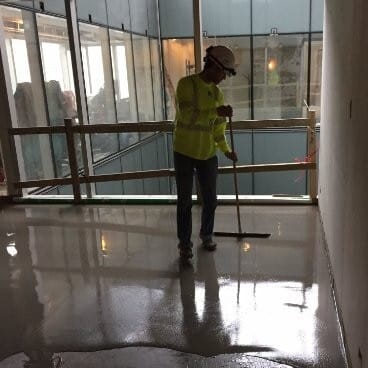
Distillery and brewery floor coatings need to meet exacting standards. At TCF West, we understand those standards and provide brewery and distillery flooring solutions that can meet and exceed them. We have installed flooring in many breweries.
Flooring For Production And Safety
We will conduct a thorough evaluation of your production floor, as well as the conditions in warehouses, taprooms, freezers, and other places in which you may need flooring. From there, we will give you a comprehensive breakdown of the flooring solutions we think will work best for you.