Why Flood-Prone Spaces Need The Right Flooring
When water gets where it doesn’t belong, cleanup, cost, and downtime follow. Many common floors absorb floodwater, trap contamination, and turn a short-term event into expensive water damage; even a concrete slab can stain and stay damp after standing water is gone.
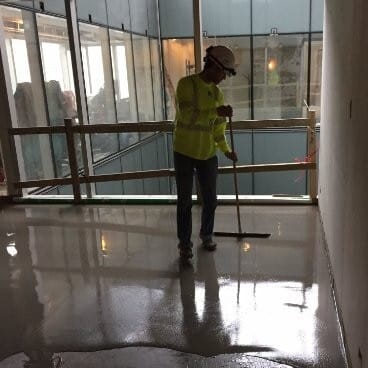
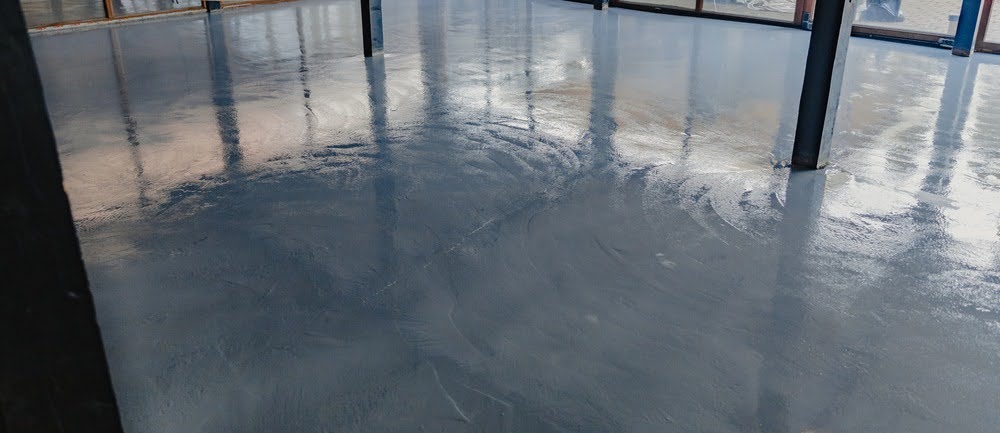
That’s where epoxy flooring helps. A properly installed epoxy coating creates a nonporous surface that keeps dirty water on top instead of soaking in, making cleanup and disinfection easier. If you’re considering hiring us for epoxy basement flooring in Calgary, that recovery advantage is a major reason people choose it.
A cove base also helps by protecting the wall-floor seam where seepage often settles, especially in spaces with a sump pump or recurring water intrusion. Epoxy won’t stop a major flood or replace drainage, foundation, or waterproofing work; if the area looks structurally unsafe, stay out, cut power, avoid wet electrical equipment, and dry the space gradually with pumps, fans, and dehumidifiers.
How Epoxy Flooring Helps During A Flood
Epoxy floors don’t stop floodwater from entering, but they make that water less destructive at the surface. Seamless flooring has no grout lines, fabric backing, or open pores to trap muddy water, so the cured surface resists absorption and helps protect the substrate from immediate staining.
Epoxy acts like a tough skin over the slab: Mud, debris, and contaminated water stay on top, which improves cleanup and sanitation. That matters in commercial flooring and industrial flooring spaces where downtime is costly.
Flooding severity still matters. Clean seepage is different from a sewage backup or storm surge, and water below the slab can create hydrostatic pressure and moisture vapour transmission that cause blistering, bubbling, peeling, or delamination.
That’s why proper surface preparation, diamond grinding, crack treatment, and moisture testing matter before coating. Following proper application guidelines and full curing helps epoxy reach its best water resistance, which is one of the key reasons to choose epoxy flooring from an experienced installer.
How Epoxy Supports Cleanup And Recovery After A Flood
After the water recedes, epoxy flooring is easier to wash, disinfect, inspect, and return to service than carpet, laminate, hardwood, tile grout, or bare concrete. Recovery still depends on what touched the floor from above and whether moisture affected it from below.
Here’s a practical recovery workflow:
- Remove debris and standing water slowly in stages.
- Use wet vacs, pumps, fans, and dehumidifiers for water removal and drying.
- Rinse off mud and contamination.
- Clean with a mild cleaner, then disinfect after any flood-damaged flooring is removed.
- Discard food, medication, cosmetics, and personal products exposed to flood water, and freeze water-damaged valuable papers, books, and photographs to help prevent mould growth.
- Inspect the floor before putting the space back into regular use.
Start inspection at control joints, repaired cracks, slab edges, corners, around floor drains, thresholds, and the wall-floor transition. Watch for bubbles or blistering, edge lift, hollow spots, cloudy patches, soft spots, or staining at joints and repairs.
If the finish still feels tight and bonded, you can usually clean and keep it. Isolated damage may allow a local repair, but widespread lifting or moisture-driven delamination usually means replacement; preparing a garage floor for epoxy properly is a big reason some floors recover better than others.
What To Know Before Choosing Epoxy For Basements, Garages, And Other Flood-Risk Areas
Not every epoxy system is built for wet conditions, and not every slab is ready to be coated. In a basement or other below-grade area, upward moisture is often the bigger issue, so we start with moisture testing, slab evaluation, and the right build for the space.
Some floors need a moisture-tolerant primer, a urethane topcoat, or a polyaspartic coating top layer for faster return to service. In harsher settings, heavier-build resinous flooring makes more sense.
Prep matters as much as product choice. We use diamond grinding to improve adhesion, then handle crack repair, joint detailing, and drain transitions carefully because those areas often decide how the floor performs during water intrusion.
Professional Epoxy Vs. Store-Bought Alternatives
Store-bought kits look cheap and quick, and they usually don’t address flood-related risks. They don’t test the slab, address moisture pressure, or include a proper joint strategy, drain detailing, or a moisture-mitigating base layer.
We build systems around actual conditions instead of hoping a thin coating will do the job:
| Flooring Option | Water Absorption | Cleanup After Dirty Water | Mould and Bacteria Risk | Replacement Risk After Flood |
| Epoxy Flooring | Very low at surface | Fast, if bond is intact | Lower on floor surface | Low to moderate, depending on moisture below |
| Tile | Low at tile face | Slower because of grout | Moderate at grout lines | Moderate if water gets below tile |
| Sheet Vinyl or Luxury Vinyl Plank (LVP) | Low at surface | Moderate | Moderate at seams and edges | Moderate to high if water gets underneath |
| Bare Concrete | High enough to stain and hold residue | Slower | Moderate | Low slab loss, high cleanup burden |
| Hardwood or Laminate | High | Poor | High | Very high |
| Carpet | Very high | Poor | Very high | Very high |
Here’s the simple version of waterproof versus water-resistant at the system level:
| Area | How Epoxy Helps | What It Doesn’t Fix |
| Surface film | Resists surface water and staining | Won’t stop flood entry |
| Joints and cracks | Helps when detailed and sealed | Open movement points still need strategy |
| Wall-floor transition | Cove base reduces seepage | Doesn’t replace drainage work |
| Around drains and pipes | Good detailing improves protection | Weak terminations still leak |
| Slab underside | Moisture-mitigating primer helps | Can’t stop hydrostatic pressure from below |
Smooth epoxy is easy to wash, but it can get slick when wet. That’s why slip resistance should be designed into the system with texture and the right topcoat, especially in garages and utility areas. If you’re weighing the benefits of coating concrete, wet traction belongs in the discussion.
Our 3-Step Flood-Ready Floor Process
Step 1: Evaluate The Slab
We start by looking at the substrate, drainage pattern, past water damage, joint condition, and moisture behaviour.
Step 2: Build The Right System
We choose the right primer, body coat, and topcoat for the room. That can include texture for traction, a cove base for washdown protection, and detailing around floor drains and thresholds.
Step 3: Prepare For Recovery, Not Just Appearance
We design for easier cleanup, better sanitation, and clearer repair options if a flood happens.
Protect Your Property With TCF West
When flooding is part of the risk picture, the goal isn’t just a nicer floor. It’s a floor system that helps you recover faster, clean up with less stress, and avoid tearing everything out after one bad event.
We’re also careful about where epoxy fits best. In a basement, moisture control and slab testing come first; in a garage floor, traction and drain detailing matter more; in commercial flooring or industrial flooring areas, washdown needs and downtime shape the system choice.
If a flood has already happened, take photos before cleanup if you can. The Government of Canada also recommends discarding materials that have come into contact with floodwater. Canadian disaster financial assistance can help explain the broader recovery framework.
Our article on the best uses for epoxy flooring gives useful context when you’re comparing spaces with different demands. We break down system basics in this practical guide to resinous flooring as well.
You can see more about our work at The Concrete Flooring (TCF) West.
Frequently Asked Questions About Epoxy And Flood Damage
Is epoxy flooring waterproof or just water-resistant?
A professionally installed system is effectively waterproof at the surface because it creates a sealed, nonporous surface. But the full floor system is only as flood-resistant as the joints, cracks, drain details, wall transitions, and slab conditions underneath.
Can floodwater get underneath epoxy flooring?
Yes. Water can move in from edges, joints, cracks, drain perimeters, or from below through the slab.
Does epoxy need to be replaced after a flood?
Not always. If the floor still has good adhesion and only saw surface exposure, cleaning and disinfection may be enough; widespread blistering, peeling, or delamination usually means replacement.
Is epoxy better than carpet, tile, or bare concrete in a flood-prone area?
Yes. It generally recovers faster and cleans more easily than carpet, laminate, hardwood, or bare concrete, though tile still has grout and edge-related cleanup issues.
Can epoxy help prevent mould after water damage?
Yes. Because the floor surface doesn’t absorb water, it doesn’t feed mould, mildew, or bacteria the way porous materials do.
Where is epoxy most useful in a building that may flood?
It’s especially useful in basements, garages, utility rooms, mechanical rooms, work areas, and many commercial spaces that need faster washdown and easier sanitation after water exposure.