You’ve walked across your warehouse or retail space a thousand times, but one morning you notice it: A crack that wasn’t there last fall, a section of floor that feels uneven underfoot, or a fine dust coating your merchandise no matter how often you sweep. In Winnipeg, where our climate pushes concrete harder than almost anywhere else in Canada, those small signs are your floor telling you something important. Catching them early saves you money, keeps your team safe, and prevents the kind of emergency shutdown that nobody’s budget can easily absorb.
Why Commercial Concrete Floors Deteriorate In Winnipeg
Winnipeg’s climate doesn’t go easy on concrete. Our winters deliver roughly 30 to 40 freeze-thaw cycles each season, among the most aggressive counts in the country. Every cycle forces moisture into tiny pores and cracks, where it freezes, expands, and chips away at the concrete from within. Road salt tracked indoors by boots and forklifts creates pitting and spalling – where pieces of concrete break off, leaving holes and cavities. Scaling from de-icing salt exposure combined with moisture infiltration is one of the fastest forms of surface degradation on a commercial slab.
Then there’s what’s happening beneath the surface. Winnipeg sits on Red River clay soil, a soil that swells when wet and shrinks when dry. This shrink-swell behaviour causes differential settlement that no amount of surface patching will fix. Soil movement creates voids under your concrete, leading to sinking, cracking, and heaving that only gets worse with time. PolyLevel® concrete lifting delivers reliable results in Winnipeg, MB, addressing sub-slab voids before they cause catastrophic failure.
Many of Winnipeg’s industrial and retail spaces were built decades ago, and their floors have absorbed years of heavy machinery, forklift traffic, and constant foot traffic. Loading docks face repeated impacts from equipment, while control joints and expansion joints in industrial spaces are especially prone to chipping under heavy forklift loads. At The Concrete Flooring (TCF) West, we understand the unique stresses placed on Manitoba buildings, and we match repair materials to local conditions every day.
Book a Quote for your commercial floor
Warning Signs That Your Commercial Floor Needs Repair
Knowing what to look for is half the battle. Here’s a severity-based framework to help you assess whether your floor damage is cosmetic, functional, or structural:
Level 1 – Cosmetic:
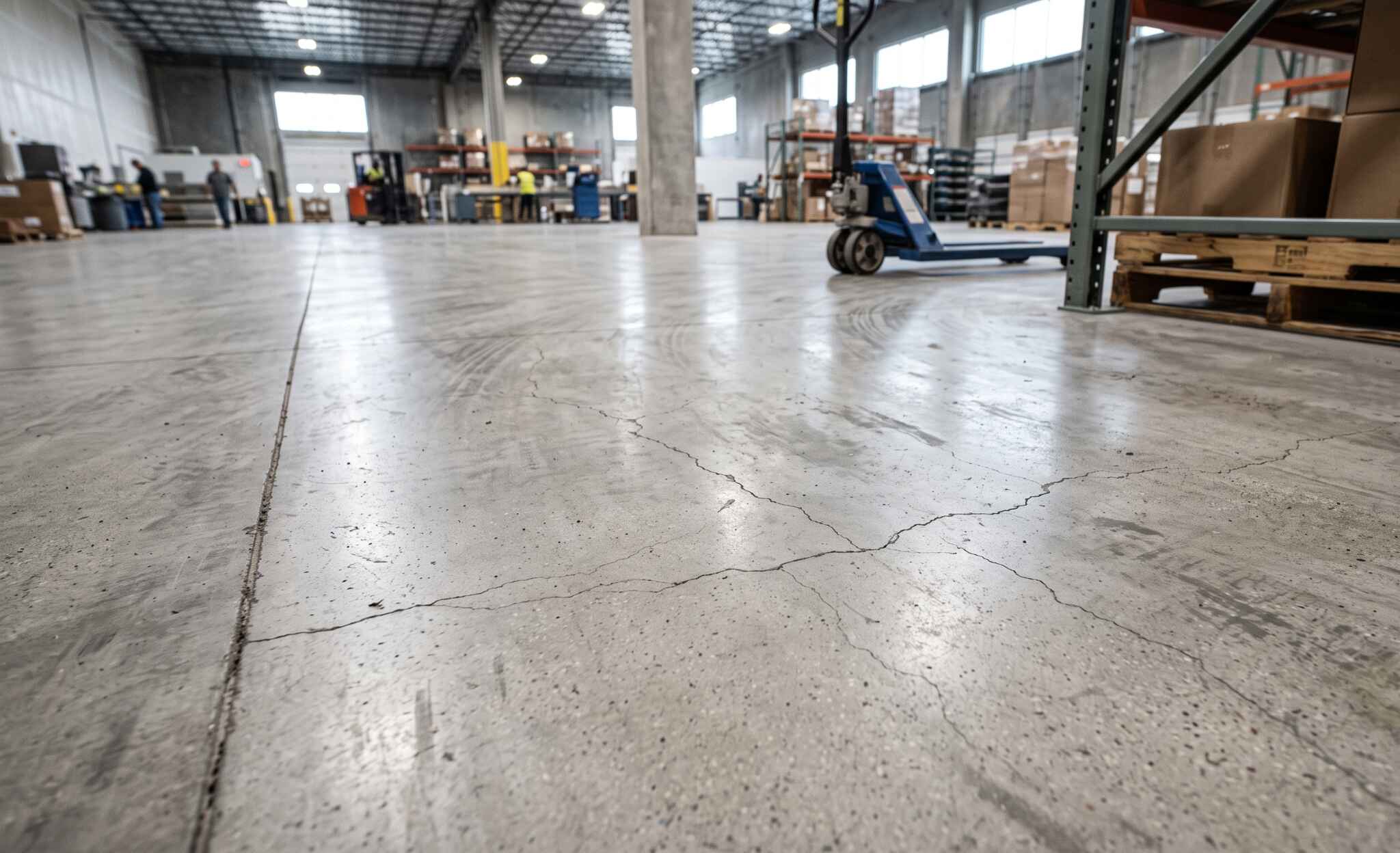
Minor surface cracks, light discolouration, or faint crazing. These aren’t urgent, but they’re worth monitoring because minor surface cracks escalate into significant structural issues when left alone.
Level 2 – Functional:
A dusty, powdery surface (known as concrete dusting) indicates compromised surface strength, usually caused by poor original curing, carbonation, or excessive trowelling during finishing. You can test this yourself: Press a strip of duct tape firmly onto the floor and peel it off. If it pulls away a visible layer of powder, your slab’s surface is failing. Unattended surface dusting escalates to severe pitting, and sealers alone won’t fix it.
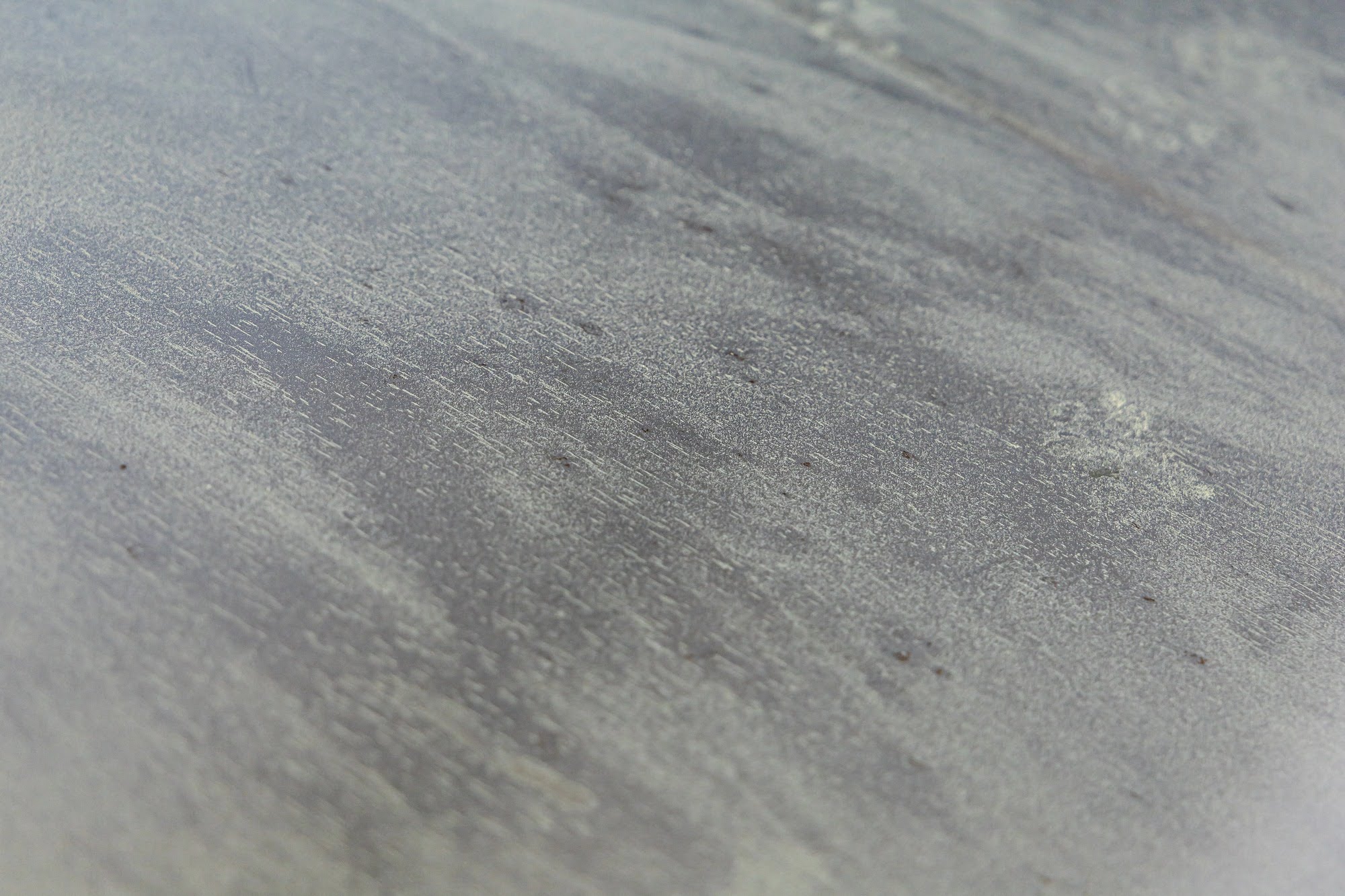
Level 3 – Structural:
Expanding or widening cracks, spalling at joints and edges, and uneven or settling slabs. Settlement cracks indicate movement in the underlying substrate. At this stage, professional concrete floor repair isn’t optional.
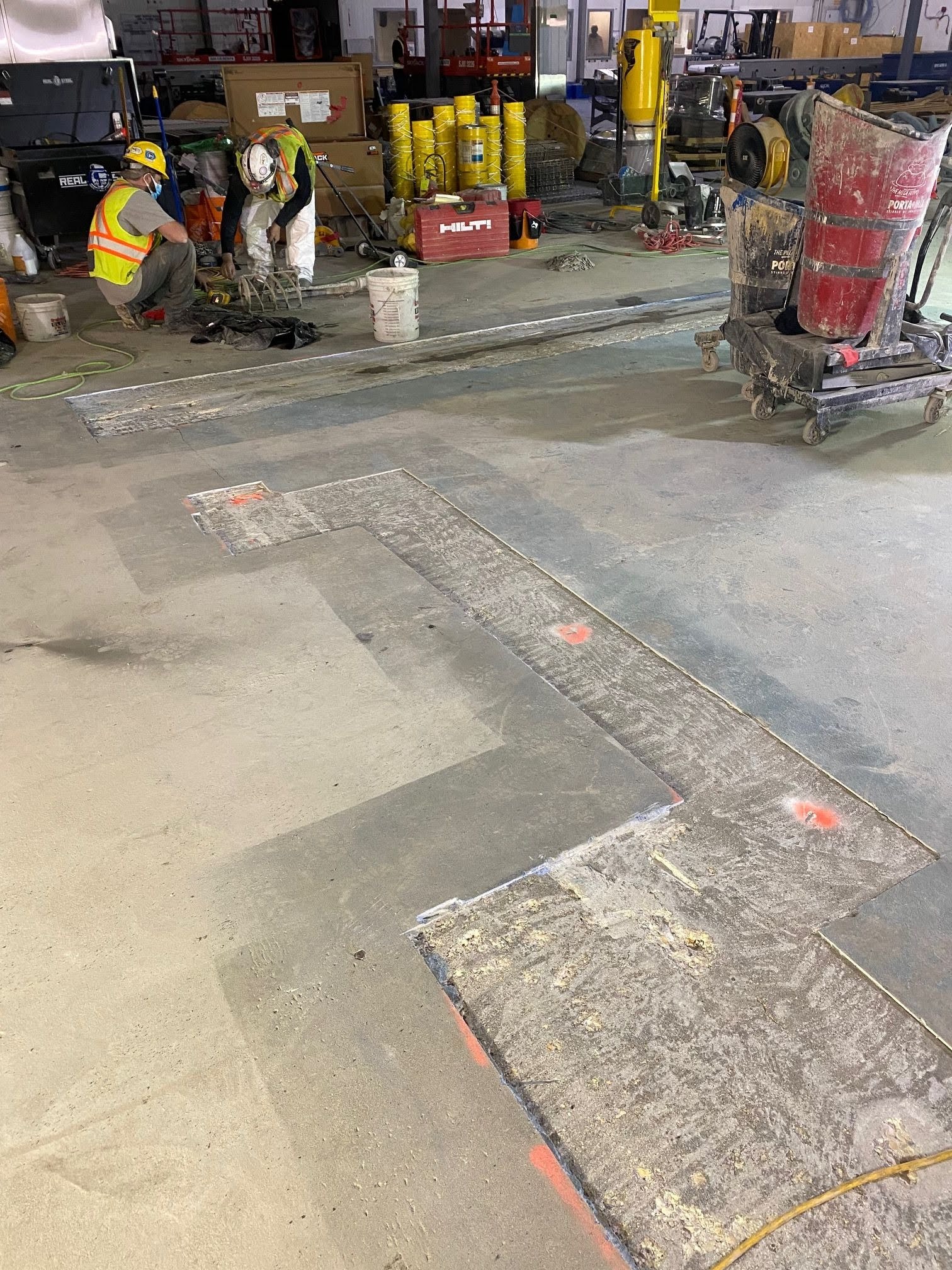
commercial floor issues winnipeg
Level 4 – Emergency:
Active water seepage, large heaving sections, or rebar-line cracking. White mineral deposits called efflorescence signal moisture dissolving mineral salts inside the concrete and depositing them on the surface as it evaporates – a process that weakens the slab from within and won’t stop on its own. Persistent dampness points to a failing vapour barrier or hydrostatic pressure forcing water through your slab.
Joint deterioration deserves its own mention. Spalling floor joint edges and failing joint filler create rough surfaces that cause wheel damage. Proper joint repair requires semi-rigid epoxy fill or polyurea, not hardware-store caulk that crumbles within weeks. If you’ve noticed concrete floor repair needs piling up, it’s time to call a professional.
Cracks and uneven concrete slab sections also create trip hazards. Repairing deteriorating surfaces ensures compliance with WorkSafeManitoba’s Workplace Safety and Health Regulation, which requires employers to maintain safe walking surfaces.
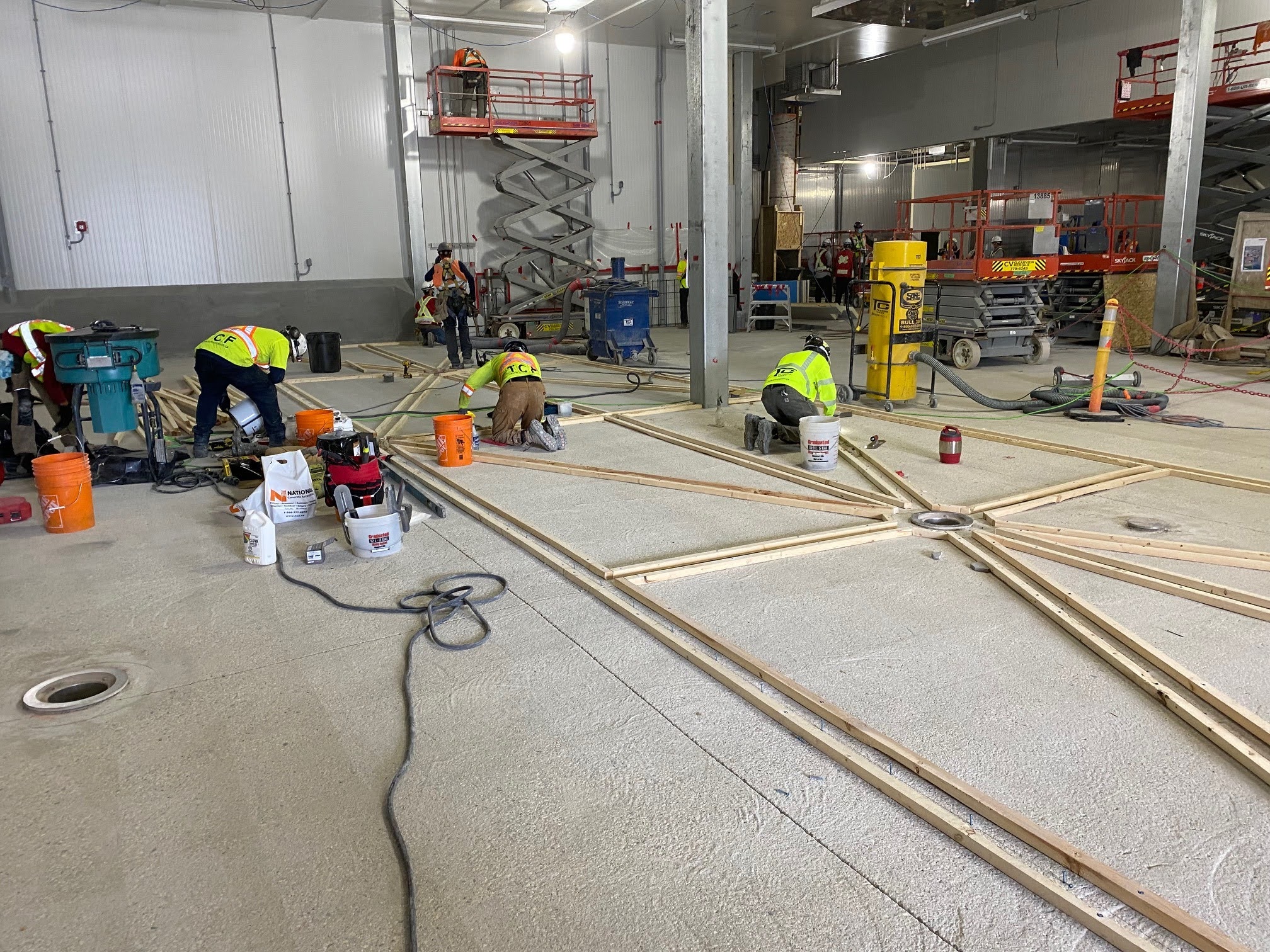
What Happens When You Delay Commercial Floor Repairs
It’s tempting to put off repairs when business is busy. But here’s what actually happens when you wait:
Costs multiply. A minor crack that costs a few hundred dollars to seal today can evolve into a full-depth repair requiring excavation within a single winter season. Early intervention on concrete damage costs three to five times less than emergency structural repair after prolonged neglect.
Safety liability grows. Under Manitoba’s workplace safety regulations, you’re responsible for maintaining safe conditions. A slip-and-fall on a deteriorated floor can result in WorkSafeManitoba claims, lawsuits, and insurance complications. Many business owners don’t realize that commercial property insurance classifies floor deterioration as deferred maintenance – your policy won’t cover damage you knew about and ignored.
Equipment suffers. Uneven surfaces and spalled joints damage forklift wheels, pallet jacks, and other material handling equipment. Those repair bills add up quietly.
Business gets interrupted anyway. Emergency repairs take longer, cost more, and give you zero control over timing. A solid facility maintenance approach keeps you in control of the schedule. Understanding the causes of concrete floor failure helps you stay ahead of problems.
Hire a Professional for your floor repairs
How Professional Commercial Floor Repair Works
Professional repair starts with a thorough assessment to identify root causes, not just symptoms:
Our Straightforward Assessment & Repair Approach
Step 1: Inspection & Diagnosis
We assess the extent of damage, test for sub-slab moisture, and identify whether soil movement, moisture intrusion, or surface wear is driving the problem.
Step 2: Targeted Repair
Based on the diagnosis, we match the right solution to the problem:
- Crack injection: We use flexible caulks, repair mortars, and epoxy injection to seal cracks and prevent moisture damage. Active cracks require routing and filling with materials that accommodate continued movement. Learn more about concrete crack repair methods that address different crack types.
- Slab levelling: For settled or sunken sections, polyurethane foam lifting (sometimes called PolyLevel) levels floors without major disruption, addressing the void beneath the slab, not just the surface.
- Full-depth patching: When concrete has lost structural integrity, we remove damaged material down to sound concrete and replace it with specialized repair mortars.
- Joint repair: Professional joint flattening and full-depth patching prevent wheel damage and ensure a smooth, durable surface for equipment traffic.
- Resurfacing and coatings: We apply new concrete overlays to resurface damaged or worn concrete. Protective top coatings like epoxy or polyurethane provide a barrier against moisture, chemical exposure, and wear. These concrete floor resurfacing options work well when the underlying structure is sound.
Step 3: Protection
After repairs, we install protective coatings or sealants engineered for the specific demands of your facility, whether that’s chemical exposure in a processing plant or heavy rolling loads in a warehouse.
Do-it-yourself patching rarely stands up to industrial traffic. Store-bought patch compounds lack the bond strength and flexibility that commercial environments demand. At TCF West, we don’t subcontract, which ensures quality control from start to finish.
Fast-curing resins and self-levelling underlayments minimize facility disruption. Some repair methods allow same-day traffic, while others require 24 to 72 hours of cure time. We plan around your operations so you don’t lose productive hours. Well-executed professional repairs typically last 10 to 15 years or more.
Protect Your Winnipeg Business With Expert Floor Repair From TCF West
When your commercial floor starts to fail, downtime and safety risks follow fast. For 10 years, TCF West has been one of Winnipeg’s premier concrete restoration specialists, with in-house crews that fix the root cause (crack injection, slab lifting, resurfacing, and protective coatings) using specialized equipment to handle any scope, from warehouses to food processing facilities, with minimal disruption. We’ll assess your floor, explain exactly what’s happening, and recommend the most cost-effective fix. Book your free assessment with TCF West today for specialized concrete repair in Winnipeg.
Frequently Asked Questions About Commercial Floor Repair
How do I know if my commercial floor damage is serious?
Hairline shrinkage cracks are usually cosmetic, but widening or deepening cracks indicate slab movement and need professional attention. If you notice uneven sections, water pooling in new areas, or white mineral deposits, the damage is structural. If cracks have grown since you first noticed them, it’s time for specialized concrete repair in Winnipeg.
Can a damaged concrete floor be repaired without full replacement?
In most cases, yes. Concrete resurfacing offers a cost-effective alternative for surfaces with a sound underlying structure, and proper repairs can extend floor life by decades. However, widespread map cracking, major settlement, extensive rebar corrosion, or repeatedly repairing the same areas may make full replacement more cost-effective.
How long does commercial concrete floor repair take?
Small crack repairs and joint filling can be completed in a day. Full-depth patching or slab levelling typically takes two to three days. Complete resurfacing of a large facility can take a week or more. We schedule around your operations whenever possible.
What does professional floor repair cost for Winnipeg businesses?
Cost varies with damage severity, repair method, and floor size, from a few hundred dollars for crack sealing up to larger investments for complete resurfacing with protective coatings. Repairs are consistently more affordable than full floor replacement. We provide free estimates so you’ll know exactly what to expect.
When is the best time of year to repair commercial floors in Winnipeg?
The ideal window runs from May through October, when temperatures support proper curing. Spring assessments are especially valuable because they catch winter damage early. Interior repairs can be done year-round if the space is climate-controlled.